

The loss of a loved one due to another person’s negligence can have devastating emotional consequences for families. In the aftermath of a tragedy, many families are left trying to understand what comes next and how the law addresses the losses they have suffered. One of the most common questions that arises is what types of damages may be recovered under Michigan wrongful death law.
Under Michigan law, wrongful death claims allow certain surviving family members to pursue financial compensation for losses caused by the death. Damages awarded in these cases are intended to address both the financial consequences of the loss and the deeply personal impact that the death has on surviving family members. While no amount of money can replace a loved one, Michigan law provides a legal framework for recognizing and compensating the harm caused by a wrongful death.
Michigan’s wrongful death statute permits recovery for several categories of damages. These may include economic losses such as lost income and medical expenses, as well as non-economic losses such as loss of companionship, guidance, and emotional support. In some cases, compensation may also reflect the pain and suffering experienced by the deceased prior to death.
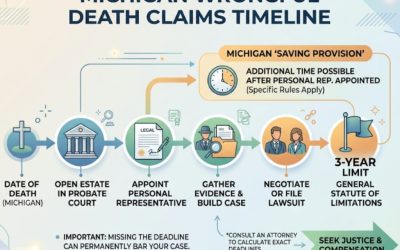
Understanding what damages may be available—and how those damages are evaluated—can help families gain clarity about their legal rights as a wrongful death claim moves forward under Michigan law. Because Michigan wrongful death claims must also be filed within specific legal deadlines, families should understand how Michigan wrongful death law works to ensure their rights are protected.
Understanding Wrongful Death Damages Under Michigan Law
In legal terms, damages refer to the financial compensation that may be awarded when a wrongful death occurs. Michigan law recognizes that a fatal accident does not affect only the person who lost their life—it can also create lasting financial and emotional consequences for the family members who survive them. A wrongful death claim allows these losses to be formally recognized within the legal system.
The damages available in a Michigan wrongful death case are intended to address the various ways a death can affect surviving family members. Some damages compensate for measurable financial losses, such as lost income, medical expenses, and funeral costs. Other damages focus on the personal and relational losses experienced by family members, including the loss of companionship, guidance, and emotional support the deceased would have provided.
Damages in a wrongful death lawsuit are not automatically fixed or predetermined. Courts evaluate each case based on its specific facts, the nature of the family relationships involved, and the extent of the losses suffered by eligible beneficiaries.
Because every family’s situation is different, the types and value of damages recovered in a wrongful death lawsuit can vary significantly. Understanding these categories can help families better appreciate how Michigan law addresses the financial and personal consequences of a wrongful death.
Economic Damages in Michigan Wrongful Death Cases
Economic damages are intended to compensate surviving family members for measurable financial losses caused by a wrongful death. These damages focus on the practical financial impact of the loss of a loved one on a household. When a person who provided financial support or essential services suddenly passes away, the resulting loss can have significant economic consequences for the family left behind.
One of the most common forms of economic damages involves the loss of income the deceased would likely have earned had the fatal incident not occurred. Courts may consider factors such as the person’s employment history, earning capacity, education, and expected future career path when evaluating these losses. Economic damages may also include lost employment benefits, such as health insurance coverage, retirement contributions, or other forms of compensation that would reasonably have been expected.
Medical expenses incurred before the individual’s death may also be recoverable in a wrongful death claim. In many situations, victims receive emergency treatment or hospitalization before passing away, and those medical costs can be substantial. Michigan law allows families to pursue compensation for these expenses as part of a wrongful death lawsuit.
Funeral and burial expenses are another common category of economic damages. The costs associated with funeral services, burial or cremation arrangements, and related expenses can place an unexpected financial burden on families already coping with the emotional impact of their loss.
Because economic damages involve financial losses that can often be documented through records and financial evidence, they frequently represent a significant component of wrongful death claims in Michigan.
Non-Economic Damages
Michigan wrongful death law recognizes not only the financial losses associated with a death, but also the personal losses experienced by surviving family members. These losses are commonly referred to as non-economic damages. While economic damages address measurable financial costs, non-economic damages focus on the emotional and relational impact the death has on a family.
One of the primary non-economic damages in wrongful death cases is the loss of companionship and society. Spouses, children, and close family members often depend on the emotional support, care, and companionship provided by the deceased. When that relationship is suddenly taken away, the loss can have lasting emotional consequences for those left behind.
Non-economic damages may also include the loss of parental guidance and support when a child loses a parent. Parents provide instruction, mentorship, and stability that cannot easily be replaced. Michigan law recognizes that the absence of this guidance can have a meaningful and lasting impact on a child’s development.
Courts may also consider the overall emotional impact the death has on surviving family members. Although these losses cannot be calculated with the same precision as financial damages, they represent an important part of the harm experienced by families after a wrongful death.
Because these damages are personal in nature, courts evaluate the strength of the family relationships involved and the role the deceased played in the lives of surviving family members when determining appropriate compensation.
Pain and Suffering Experienced Before Death
In some wrongful death cases, the person who ultimately passed away did not die immediately after the incident that caused the fatal injury. When a victim survives for a period of time before passing, Michigan law may allow compensation for the pain and suffering the individual experienced during that time.
These damages are different from the losses suffered by surviving family members. Instead, they relate directly to the physical pain, emotional distress, and suffering endured by the deceased prior to death. Even if the period between the injury and death lasted only hours or days, the law recognizes that the individual may have experienced significant suffering as a result of the injuries.
Evidence used to establish these damages may include medical records, testimony from healthcare providers, and other documentation describing the victim’s condition before death. In some cases, expert witnesses may also help explain the extent of the suffering.
Pain and suffering damages are typically pursued by the estate as part of a wrongful death claim. When supported by appropriate evidence, these damages may represent an additional component of compensation that reflects the full impact of the fatal injuries.
What Evidence Is Used to Prove Wrongful Death Damages?
Damages awarded in Michigan wrongful death cases must be supported by evidence demonstrating both the financial and personal losses caused by the death. Because compensation depends on proving the impact the loss has had on surviving family members, courts rely on documentation, testimony, and expert analysis to evaluate these damages.
Financial records are often used to establish economic losses. Documents such as tax returns, pay stubs, employment records, and benefits statements can help demonstrate the income the deceased earned and the financial support they provided to their family. Financial experts may also rely on these records to estimate the income and benefits the individual likely would have earned in the future.
Medical records may also play an important role in wrongful death cases. These records can document the injuries suffered, the treatment provided before death, and the timeline of medical care following the incident. When pain and suffering before death is claimed, medical documentation can help explain the victim’s condition and the severity of the injuries.
Testimony from family members, friends, or other witnesses may also be presented to describe the relationship between the deceased and surviving family members. This testimony can help illustrate the family’s emotional and relational losses.
In some cases, expert witnesses may also be involved to evaluate financial damages, medical issues, or other aspects of the case. Their analysis can help courts better understand the full impact the wrongful death has had on the family.
How Courts Determine the Value of Wrongful Death Damages
Determining the value of damages in a wrongful death case can be complex. Michigan courts carefully review the specific circumstances of each case to determine an amount of compensation that fairly reflects the losses suffered by surviving family members. Because every family’s situation is different, the value of wrongful death damages can vary significantly from case to case.
Courts consider several factors when evaluating damages. These may include the deceased’s age and health, their earning capacity, and the financial support they provided to their family. Courts may also examine the nature of the relationships between the deceased and the surviving family members seeking compensation.
When evaluating economic losses, courts often review employment records, financial documentation, and expert analysis to estimate the income and benefits the deceased likely would have earned in the future. This evaluation may consider factors such as career trajectory, expected raises, and retirement benefits.
In assessing non-economic damages, courts may also consider testimony describing the role the deceased played within the family. Evidence about the emotional support, companionship, and guidance the individual provided can help illustrate the impact the loss has had on surviving family members.
Because wrongful death damages involve both financial and personal losses, courts rely on a combination of evidence, testimony, and legal standards to reach a fair determination of compensation.
How Wrongful Death Damages Are Distributed Among Family Members
Michigan law provides a structured process for distributing damages recovered in a wrongful death lawsuit. Compensation is not automatically awarded to a single individual. Instead, the damages are divided among eligible family members who have suffered losses as a result of the death. The distribution is typically reviewed and approved by the court to ensure that it is fair and consistent with Michigan law.
Michigan’s wrongful death statute identifies certain relatives who may be entitled to share in any recovery. These often include a surviving spouse, children, parents, and, in some situations, siblings or other dependents. Each eligible family member’s losses are considered when determining how compensation should be allocated.
Courts generally evaluate the nature of each person’s relationship with the deceased and the type of loss that individual experienced. For example, a spouse may experience the loss of companionship and financial support, while children may suffer the loss of parental guidance and care. These differences can influence how damages are distributed among family members.
In many cases, the personal representative of the estate works with legal counsel to propose a distribution plan. The court then reviews the proposal and may consider any concerns raised by eligible beneficiaries before approving the final allocation of damages.
Because every family situation is unique, wrongful death damages are distributed based on the losses experienced by each eligible beneficiary rather than being divided equally among family members.
Why Wrongful Death Damages Vary From Case to Case
No two wrongful death cases are exactly the same, which is why the amount of damages recovered can vary significantly from one case to another. Each situation involves different family relationships, financial circumstances, and life factors that influence how losses are evaluated under Michigan law.
One of the primary reasons damages vary is that each individual’s life circumstances are unique. Factors such as the person’s age, health, occupation, and expected future earning capacity can all affect the calculation of economic damages. For example, a younger individual with many working years ahead may present different projected financial losses than someone who is closer to retirement.
Family structure also plays an important role. The number of dependents, the strength of family relationships, and the role the deceased played within the household can all influence how damages are evaluated. The loss experienced by a surviving spouse raising young children may differ significantly from the loss experienced by extended family members.
Because courts must evaluate both financial and personal losses, wrongful death damages are ultimately determined based on the unique facts of each case. This case-by-case evaluation helps ensure that compensation reflects the specific impact the death has had on surviving family members.
Talk With a Michigan Wrongful Death Attorney About Your Options
Understanding what damages may be available after a wrongful death can help families make informed decisions during an extremely difficult time. Because Michigan wrongful death claims involve both legal and financial considerations, it is important to understand how the law evaluates damages and how those damages may apply to your family’s situation.
Every wrongful death case presents unique circumstances. Factors such as family relationships, the financial support the deceased provided, and the evidence available to support the claim can all influence the outcome of a case. Speaking with an attorney early in the process can help families better understand their rights and the steps required to pursue compensation under Michigan law.
If you have lost a loved one due to someone else’s negligence, an experienced wrongful death attorney can help guide you through the legal process and work to protect your family’s rights.
For decades, John Alexander has helped Michigan families navigate wrongful death claims with clarity, care, and experience.
📞 Call 248-290-5600 for a free consultation
📍 Serving families throughout Michigan from our Bingham Farms law firm
There is no obligation and no attorney’s fee unless compensation is recovered. Getting answers early can help families move forward with greater clarity and peace of mind.
National Top 100 Trial Attorney™
National Trial Lawyers Association
Million Dollar Advocates Forum™
Lifetime Member
Michigan Super Lawyer©
Law and Politics Magazine
Top Lawyer
DBusiness Magazine
Lawyers of Distinction Inductee
National Law Journal

0 Comments