

Families grieving the loss of a loved one due to someone else’s negligence are often left with difficult questions about what happens next. One of the most common—and most confusing—questions we hear is: Who actually receives compensation in a Michigan wrongful death case? The answer is not always straightforward, and misunderstandings at this stage can add unnecessary stress during an already painful time.
Many families assume that the person who files a wrongful death lawsuit automatically receives any settlement or verdict. That is not how Michigan wrongful death law works. While the claim must be filed by the deceased person’s estate, compensation is intended for specific surviving family members who have suffered a loss. Understanding this distinction early can help avoid confusion, family disputes, and delays as the case moves forward.
Michigan’s wrongful death law follows a structured, court-supervised process designed to promote fairness. The estate serves as the legal vehicle for bringing the claim, but the law carefully defines which relatives may share in any recovery and how those funds are ultimately distributed. This structure is intended to protect all eligible beneficiaries and reduce disputes over distribution.
For a more complete explanation of how Michigan wrongful death claims work from start to finish—including filing requirements, available damages, and important timelines—we encourage you to review our comprehensive guide to wrongful death claims in Michigan, which serves as the foundation for the wrongful death information on our site.
Michigan’s Wrongful Death Law — How Compensation Works
Michigan’s wrongful death law follows a structured and highly procedural framework. Rather than relying on informal agreements or private arrangements between family members, compensation in Michigan wrongful death cases is governed by statute and overseen by the courts. This approach is intentional. It ensures that compensation is handled fairly, transparently, and in accordance with the law—especially in emotionally charged situations where misunderstandings can easily arise.
One of the most common sources of confusion involves the assumption that compensation automatically goes to the person who files the lawsuit. Under Michigan law, that is not correct. A wrongful death claim must be filed by the personal representative of the estate, who acts in a fiduciary capacity. The personal representative brings the claim on behalf of the estate, but the compensation is intended for those individuals the law recognizes as having suffered a compensable loss.
Court oversight is another critical component of wrongful death compensation in Michigan. Any settlement or verdict must be reviewed and approved by the probate court before funds are distributed. This process helps ensure that all eligible family members are identified, that proposed distribution plans are equitable, and that no one is improperly excluded. While court involvement may feel formal during a time of grief, it often plays an important role in preventing disputes and protecting the interests of all parties.
Michigan’s wrongful death statute also defines who qualifies as an eligible beneficiary—those individuals who may be entitled to share in any financial recovery. Eligible beneficiaries typically include close relatives, such as spouses, children, and parents, but may also include other family members or financial dependents in certain circumstances. Understanding who qualifies is essential, as it directly affects how compensation is allocated.
For a more detailed explanation of how Michigan wrongful death claims work from start to finish—including who may file, what damages may be recovered, and how the courts oversee the process—you may want to review our comprehensive resource on Understanding Michigan Wrongful Death Claims, which provides a complete overview of the legal framework.
The Role of the Personal Representative (PR)
Michigan law requires that any wrongful death claim be filed through the deceased person’s estate. As a result, understanding the role and responsibilities of the personal representative is essential. Understanding this role early helps prevent many of the misunderstandings and frustrations that can arise during wrongful death cases.
Who Is the Personal Representative?
A personal representative is appointed by the probate court when an estate is opened in probate. In some cases, the deceased may have named a personal representative in a will. However, in many wrongful death cases—particularly those involving sudden or unexpected deaths—no will exists, and the court appoints someone close to the deceased.
Most commonly, the personal representative is:
- A surviving spouse
- An adult child
- A parent of the deceased
Although the personal representative files the wrongful death lawsuit on behalf of the estate, being appointed to this role does not automatically entitle the personal representative to any additional compensation. The position exists solely to ensure that the legal process proceeds properly and in compliance with Michigan law.
What the Personal Representative Does (and Does Not Do)
Personal representatives have specific legal responsibilities in Michigan wrongful death cases, including:
- Filing the wrongful death lawsuit on behalf of the estate
- Working closely with the wrongful death attorney to gather records, documents, and evidence
- Communicating with family members and keeping them informed of significant developments
- Acting as a fiduciary, meaning they must act in the best interests of all eligible beneficiaries
Just as important are the things a personal representative does not do. A personal representative does not personally decide who receives compensation or how much each family member is paid. Any distribution of a settlement or verdict must be reviewed and approved by the probate court. This court oversight exists to protect families and reduce the risk of disputes, particularly during emotionally difficult circumstances.
For a more detailed explanation of how personal representatives fit into the overall wrongful death process—including court involvement and beneficiary rights—you may want to review our in-depth guide, Understanding Michigan Wrongful Death Claims, which explains the role of the personal representative.
Family Members Who May Receive Compensation Under Michigan Law
Michigan’s wrongful death statute clearly identifies which family members may be entitled to share in compensation after a fatal accident. Although every case is different, the law follows a structured hierarchy to prioritize those most directly affected by the loss. Understanding who may qualify—and under what circumstances—helps families set realistic expectations and avoid unnecessary confusion.
Immediate Family Members
In most Michigan wrongful death cases, immediate family members are presumed eligible to receive compensation. These individuals are typically the ones most directly impacted both emotionally and financially by the death.
Immediate family members commonly include:
- Spouse – A surviving spouse is generally eligible to seek compensation for loss of companionship, emotional support, and the financial contributions the deceased would have provided.
- Children – Both minor and adult children may qualify for compensation. Courts consider factors such as loss of parental guidance, emotional support, and financial dependence when determining each child’s share.
- Parents – Parents of a deceased child—whether the child was a minor or an adult—may also be entitled to compensation. This often includes loss of society and companionship, and, in some cases, financial support.
While immediate family members are commonly eligible, the amount each person receives depends on the specific facts of the case and the extent of their loss.
Extended Family Members
Michigan law allows extended family members to share in wrongful death compensation in certain situations, typically when there is no surviving spouse, child, or parent, or when extended relatives can demonstrate a qualifying legal or financial connection to the deceased.
Extended family members who may qualify include:
- Siblings – Brothers and sisters may be eligible in limited circumstances, particularly when they can demonstrate a close relationship or financial dependence.
- Grandparents – In some cases, grandparents may qualify when no immediate family members exist or when they can show significant loss or dependency.
- Nieces and Nephews – In limited situations, nieces and nephews may qualify under Michigan’s intestate succession laws if no closer relatives exist.
Because eligibility for extended family members depends heavily on family structure and probate law, these situations require careful legal analysis.
Financial Dependence and Eligibility
Michigan wrongful death law considers not only family relationships, but also financial dependence. In certain cases, individuals who relied on the deceased for financial support may be eligible to receive compensation—even if they are not immediate family members.
Examples of financial dependence may include:
- Elderly parents who relied on the deceased for ongoing financial support
- Disabled adult children
- Other relatives who depended on the deceased for housing, care, or financial assistance
Proving financial dependence requires documentation. This may include tax records, bank statements, proof of shared living expenses, medical or caregiving records, or other evidence showing reliance on the deceased’s income or support.
Because eligibility and distribution can depend on many factors, working with an experienced Michigan wrongful death attorney is essential to ensure all eligible beneficiaries are properly identified and protected under the law.
How Michigan Courts Decide Who Gets What
Michigan law mandates probate court oversight to ensure that any wrongful death settlement or verdict is distributed fairly and in accordance with the Michigan Wrongful Death Act. While this process can feel formal or cumbersome, its purpose is to protect families during an emotionally difficult time and to prevent disputes before they arise.
Approval Process in Probate Court
Once a wrongful death case concludes—whether through settlement or trial—the proposed distribution of compensation must be submitted to the probate court for approval. This step is required under Michigan law and cannot be bypassed.
The personal representative, with the assistance of legal counsel, prepares a proposed distribution plan outlining:
- The total recovery amount
- The eligible beneficiaries
- How the funds are proposed to be distributed among those beneficiaries
The probate court then reviews the proposal and provides notice to all interested parties. Eligible family members are given an opportunity to raise questions or express concerns before the court approves the final distribution. In many cases, this structured process helps reduce conflict and ensures transparency for everyone involved.
Factors Judges Consider When Allocating Compensation
Michigan courts do not simply divide compensation evenly among family members. Instead, judges evaluate several factors to determine a fair and equitable distribution based on each individual’s loss and circumstances. Common considerations include:
- The nature of each beneficiary’s relationship to the deceased
- The level of financial dependence on the deceased, including loss of income or support
- Emotional loss, such as loss of companionship, guidance, and care
- The age and health of surviving family members
- Living arrangements at the time of death
- Contributions the deceased made to the household or family unit
- Special needs or vulnerabilities, such as disabled dependents
The goal is equitable—not equal—distribution, ensuring compensation reflects the actual impact of the loss on each eligible family member.
Why Court Oversight Can Benefit Families
Although probate court involvement may initially seem intimidating, many families come to appreciate its role. Court supervision helps:
- Protect vulnerable family members
- Prevent one individual from exerting undue influence
- Reduce long-term disputes
- Create a clear, legally binding resolution
Many families find reassurance knowing that a neutral judge—rather than heightened emotions or family dynamics—ultimately determines how compensation is distributed under Michigan law.
What Happens When Family Members Disagree About Compensation?
Arguments among family members often arise during Michigan wrongful death cases, particularly when emotions are raw and the loss is sudden. Questions about who should receive compensation, how much each person should receive, or whether someone should be included at all can quickly create tension within families. Michigan’s wrongful death process anticipates such situations and provides a structured framework for resolving disputes fairly.
Beneficiaries in Conflict
Disagreements may arise for a variety of reasons, including:
- Differing views regarding financial dependence or emotional loss
- Complications involving blended families or strained family relationships
- Disputes concerning the role or conduct of the personal representative
- Concerns that one beneficiary may be receiving preferential treatment
Importantly, family disagreements do not prevent a wrongful death case from moving forward. Michigan law does not require a unanimous family agreement in order for compensation to be awarded. Instead, court supervision exists specifically to address and resolve conflicts in an orderly and impartial manner.
In many situations, experienced legal counsel can help defuse tension early by clearly explaining how Michigan law applies to each family member’s circumstances. Clear communication and proper documentation often resolve concerns before they escalate into formal disputes.
How Michigan Courts Resolve Disagreements
When disputes cannot be resolved informally, the probate court becomes involved. As part of the required approval process for any settlement or verdict, the court allows eligible beneficiaries to raise objections or concerns regarding how compensation should be distributed.
Depending on the circumstances, a judge may:
- Review the written objections submitted by family members
- Conduct a hearing to allow all parties to present their positions
- Examine financial records, dependency evidence, and testimony
- Consider expert opinions or additional supporting documentation
The court does not take sides. Instead, it evaluates the evidence and applies Michigan law to reach an equitable resolution. Judges focus on each beneficiary’s actual loss—financial, emotional, and practical—rather than family dynamics or internal disagreements.
Although court involvement can feel stressful, it often provides families with clarity and closure. Having a neutral judge oversee the process helps prevent long-term resentment and ensures that the final distribution is legally sound and binding. In many cases, this structure allows families to move forward without lingering uncertainty or unresolved conflict.
Common Mistakes Families Make When Dividing Wrongful Death Compensation
After experiencing the devastating loss of a loved one due to another person’s negligence, families are often forced to make important legal decisions while grieving and emotionally overwhelmed. Unfortunately, missteps during this process can delay a case, reduce available compensation, or create unnecessary conflict among family members. Understanding these common mistakes can help families protect their rights and avoid added complications during an already difficult time.
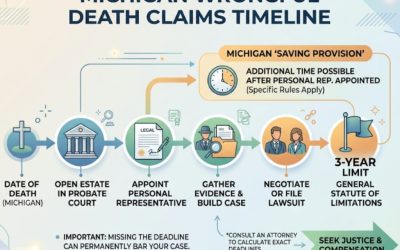
Waiting Too Long to Open an Estate
Michigan law requires that a wrongful death claim be brought through an estate, with a personal representative formally appointed by the probate court. Families sometimes delay this step while focusing on funeral arrangements, emotional healing, or simply because they are unsure of what to do first.
Waiting too long to open an estate can slow an investigation, allow evidence to be lost, and delay the filing of a lawsuit. In some cases, missed deadlines can limit or completely bar a family’s ability to recover compensation. Opening the estate early allows an attorney to begin preserving evidence and protecting the family’s legal interests from the outset.
Assuming Equal Distribution Is Automatic
Many families believe wrongful death compensation will be divided equally among surviving relatives. Michigan law does not require equal distribution. Instead, courts evaluate each eligible beneficiary’s individual losses when determining how compensation should be allocated.
Assuming equal division is guaranteed can lead to frustration or disappointment when the court-approved distribution differs from expectations. Understanding this process early helps families set realistic expectations and reduces the likelihood of disputes later in the case.
Failing to Document Financial Dependence
Financial dependence plays an important role in how compensation may be distributed, particularly when extended family members or adult children are involved. Families sometimes overlook the need to document this dependence, assuming the family relationship alone is sufficient.
Michigan courts rely on evidence—not assumptions. Failing to provide documentation such as tax records, proof of shared expenses, or evidence of ongoing financial support can weaken a beneficiary’s claim or reduce their share of compensation. Proper documentation ensures that all qualifying losses are fully considered by the court.
Trying to Resolve Disputes Without Legal Guidance
When disagreements arise, families may try to resolve them privately to avoid court involvement. While this is often well-intentioned, informal agreements that do not comply with Michigan’s wrongful death procedures may ultimately be rejected by the court or lead to further disputes.
Experienced legal guidance helps families navigate disagreements in compliance with Michigan law and protects everyone involved. Attorneys serve as neutral intermediaries, keeping the focus on legal requirements rather than emotional conflict.
Avoiding these common mistakes can help families move through the wrongful death process more smoothly and with greater confidence, allowing them to focus on healing while knowing their legal rights are being properly protected.
Why Legal Guidance Matters in Wrongful Death Compensation Cases
Wrongful death cases are both legally complex and emotionally charged. Grieving families are often required to navigate probate court procedures, statutory deadlines, and compensation issues while simultaneously coping with loss. Experienced legal guidance helps ensure the process is handled properly, fairly, and in full compliance with Michigan law—without placing unnecessary burdens on family members during an already difficult time.
Reducing the Risk of Family Conflict
Disputes among family members are common in wrongful death cases. Questions about who qualifies for compensation, how losses should be evaluated, or whether one person is receiving preferential treatment can quickly escalate into conflict.
Clear legal guidance helps prevent these issues by explaining how Michigan law applies to each family member’s situation. When expectations are established early and decisions are grounded in statutory requirements rather than emotion, families are far less likely to experience disputes that delay resolution or cause lasting strain on relationships.
Ensuring All Eligible Beneficiaries Are Properly Identified
Michigan’s Wrongful Death Act specifies who may be entitled to share in compensation, but identifying all eligible beneficiaries is not always straightforward. Blended families, estranged relatives, adult children, and financially dependent individuals often present unique legal considerations.
An experienced attorney ensures that all potential beneficiaries are properly identified and notified as required by law. This protects their rights and helps prevent future challenges to settlements or court-approved distributions.
Proper Documentation and Court Compliance
Probate court oversight is a required part of wrongful death compensation in Michigan. Courts rely on documentation—not assumptions—when reviewing proposed distributions. This includes evidence of financial dependence, loss of support, and the nature of each beneficiary’s relationship to the deceased.
Legal counsel ensures that all necessary documentation is collected, organized, and presented correctly. This reduces delays, minimizes objections, and increases the likelihood that the court will approve the proposed distribution without additional hearings or complications.
Protecting the Personal Representative From Liability
Personal representatives serve in a fiduciary capacity and are legally required to act in the best interests of all eligible beneficiaries. Without proper legal guidance, a personal representative may unknowingly make decisions that expose them to claims of favoritism, mismanagement, or breach of fiduciary duty.
Working with an attorney helps protect the personal representative by ensuring compliance with Michigan law, proper court procedures, and clear documentation of all decisions. This allows the personal representative to fulfill their role confidently, without unnecessary personal legal risk.
Why Experienced Legal Representation Matters
Legal representation in wrongful death compensation cases serves a critical purpose: protecting families during an extraordinarily difficult time. By ensuring compliance with Michigan law, preventing disputes, and safeguarding everyone involved, experienced legal counsel allows families to focus on healing while the legal process moves forward correctly and fairly.
Talk With a Michigan Wrongful Death Attorney Before Making Any Decisions
Questions surrounding wrongful death compensation often arise at a time when families are already emotionally overwhelmed. Understanding who may be eligible for compensation, how it is distributed, and the steps required under Michigan law can be critical to protecting your family’s rights and avoiding unnecessary disputes.
For decades, the Law Office of John T. Alexander has helped Michigan families navigate wrongful death claims with care, precision, and respect. From identifying all eligible beneficiaries to properly handling probate court requirements, our firm stands alongside families during some of their most difficult moments.
If you have questions or would like to understand your options before making important decisions, speaking with a Michigan wrongful death attorney as early as possible can make a meaningful difference.
📞 Call 248-290-5600 for a free consultation
📍 Serving families throughout Michigan from our Bingham Farms office
There is no obligation and no attorney’s fee unless compensation is recovered. Getting answers early can help bring clarity, confidence, and peace of mind during an otherwise uncertain time.

0 Comments